What Rust Is Better For a New Player
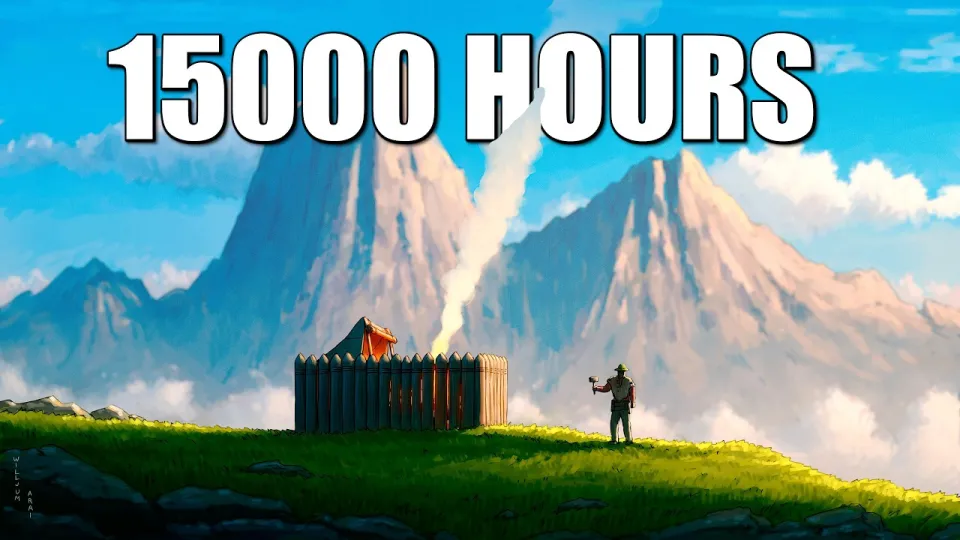
Video: How a solo with 14,782 Hours plays official rust...
Want articles like this for your own video to promote it on YouTube and Google? Order them through the Telegram bot @sat_sit_bot. The bot writes and publishes the articles itself (with your YouTube video embedded) on popular topical websites (no ads). Your first 50 articles are free.
· based on the channel Willjum
For a new Rust player, watching a 14,782-hour solo veteran run official servers is the better first step than jumping straight into a vanilla wipe, because it teaches base placement, scrap economy and fight selection before you lose your first kit. Official Rust punishes ignorance with a full loot loss, and an hour of structured observation costs nothing, while a bad first wipe on a 1,000-population server can burn an entire evening. If you want gear for the real-world side of the hobby, the video's sponsor page at MANSCAPED with code WILLJUM15 for 15% off and free shipping is the link used in the intro.
What 14,782 hours of Rust actually represents
Fourteen thousand seven hundred and eighty-two hours is not a marketing number; it is roughly 1,180 hours per year across the 12.5 years since Rust entered early access, or about 1,850 hours per year if you count only from the 2018 full release. For comparison, a part-time job runs around 1,100 hours annually and a full-time job around 2,000, so the account has been played at near-employment intensity for years. That matters for a solo player because Rust knowledge compounds: recoil patterns, monument layouts, crate timings, building costs and the sound of a footsteps at distance are all memorized rather than looked up. A veteran solo does not win because of aim alone; the advantage is that every decision, from where to put the first foundation to when to abandon a fight, is a rehearsed pattern. Willjum's channel is built on exactly this kind of long-form solo survival storytelling, which is why the hour-plus format works as a teaching tool rather than background noise.
Official vanilla versus modded and community servers
The core difference is that official Rust gives no safety net, so every lesson costs real progress. On official servers there are no boosted gather rates, no increased stack sizes, no team-size enforcement protecting a solo, and no admin to roll back a raid or a lost body. Community and modded servers, including Willjum's own rotation, change those variables: his network lists EU and NA solo-only Thursdays, Casual Duo Monthlies, 1.5x Trio Thursdays, 2x Trio Mondays and 3x Fridays, all reachable through the willjum.eu and willjum.us domains. A 2x or 3x server compresses the farming phase, which is useful when you are learning monuments and combat, but it also inflates the number of geared players roaming. Vanilla official is slower, harsher and the only place where the economy you learn transfers without adjustment. For a first 100 hours, modded is the better classroom; for the real thing, official is the exam.
How a solo survives a wipe on official servers
Survival as a solo is a sequence of deliberate choices rather than a single trick, and the veteran run demonstrates the order in which they happen.
- Start away from the main roads and the biggest monuments. A small footprint base in a low-traffic grid survives longer than a good base next to Launch Site.
- Build cheap and expand later. The base featured in the video is credited to the builder Luca.Builds, and the design is compact enough to hide rather than to defend.
- Keep the scrap economy honest. Nail guns and primitive weapons are cheap; saving scrap for a workbench and blueprints pays back faster than buying a single expensive gun early.
- Use decoys. A mannequin placed in a window draws fire and attention away from the door you actually use.
- Pick fights you can leave. Jumping a duo as a solo only works when you have the angle, the element of surprise and an exit route.
None of these steps require exceptional PvP mechanics, which is the point: the veteran's edge is positioning and patience, not flick shots.
Typical questions and doubts from viewers
The most common skepticism is about the hours themselves, and it is fair. A viewer calculated that 14,782 hours means playing Rust like a part-time job for over a decade, and others pointed out that idle time with the game logged in inflates any Steam counter. The honest answer is that the number is a ceiling, not a measure of active skill, and it should be read as years of pattern recognition rather than 14,782 hours of firefights. The second recurring doubt is about the peaceful-farmer persona: the channel's calm, farming-focused presentation regularly gives way to aggressive plays, and viewers notice the contradiction. Third, players ask whether the strategies transfer to their own servers, and the answer depends on population and rates, not on the video. Finally, there is the audience that never intends to play at all and watches for the survival narrative, which is a legitimate way to enjoy the game.
What a new solo should copy and what to ignore
Copy the decision-making, not the highlight reel. The transferable habits are map awareness, sound discipline, keeping a spare kit in a stash box, and never carrying more scrap than you need for the next trip. Ignore the urge to contest every airdrop and every gunfight; a solo who dies with a full inventory loses hours, while a solo who walks away loses nothing. Also ignore the assumption that official servers are unplayable without a group. They are harder, but the population on official vanilla is often lower and more predictable than on a packed community server, and a quiet corner of the map is available on both. The one thing worth spending real money on is not a skin but a stable connection and a headset that lets you hear a bear behind you, since audio cues decide more fights than recoil control.
All links from the video
- MANSCAPED sponsor offer with code WILLJUM15: https://manscaped.com/willjum
- Willjum on Patreon: https://www.patreon.com/Willjum
- Willjum on Twitch: https://www.twitch.tv/willjum
- Willjum on Twitter: https://twitter.com/willjum1
- Creative Commons Attribution 4.0 license referenced for the music: http://creativecommons.org/licenses/by/4.0/
Conclusion
Rust rewards the player who treats a wipe as a series of small, reversible decisions, and a 14,782-hour solo account is proof that the pattern holds over years rather than hours. Official vanilla servers are the better long-term teacher because they never soften a mistake, while modded and community servers are the better short-term classroom for learning monuments and combat under pressure. Watch the long-form solo breakdowns to absorb base placement, scrap discipline and fight selection, then apply one habit per wipe instead of trying to copy everything at once. The video breakdown above comes from the channel Willjum, whose solo survival series is a practical reference for anyone learning official Rust. If you are stocking up on gear for the grind, use the MANSCAPED page with code WILLJUM15 for 15% off and free shipping linked in the video.
Key takeaways
- Willjum's featured solo account carries 14,782 hours of Rust playtime, roughly 1,180 hours per year across 12.5 years of the game's life.
- The run is on official vanilla Rust, where there are no boosted gather rates, no team cap protection and no admin rollback.
- The solo base in the video is credited to builder Luca.Builds, with a mannequin placed in a window as a decoy.
- Willjum's community servers include EU and NA solo-only Thursdays and Casual Duo Monthlies, listed under willjum.eu and willjum.us domains.
- The video was published on 7 June 2026 by the channel Willjum and is sponsored by MANSCAPED, with code WILLJUM15 for 15% off plus free shipping.
Source: How a solo with 14,782 Hours plays official rust... · Markdown version
Questions & answers
Is 14,782 hours of Rust even possible?
Yes, but it should be read as total logged time, not active play. Spread across the 12.5 years since early access it works out to roughly 1,180 hours per year, and if you count only from the 2018 full release it is closer to 1,850 hours annually. Idle time with the game running inflates any Steam counter, so treat the figure as years of experience rather than a measure of skill.
Should a new player start on official Rust servers or modded ones?
Start on a low-population modded or 2x server to learn monuments, building costs and combat without losing hours of farming to one mistake. Move to official vanilla once you can consistently get a base, a workbench and a kit without dying on the way. Official servers have no boosted rates and no admin protection, which is exactly what makes the lessons stick.
How does a solo player survive on a high-population official server?
Build small and away from main roads, expand only after the first few days, and avoid contests you cannot leave. Keep spare kits stashed, never carry more scrap than the next trip requires, and use decoys such as a mannequin in a window to draw fire. Positioning and patience matter more than aim.
Do the strategies in long solo videos transfer to my own wipe?
The decision-making transfers, the specific fights do not. Map awareness, sound discipline, scrap management and fight selection work on any server, while contesting every airdrop or gunfight is a highlight-reel habit that costs a solo real progress. Adapt the base size and monument choices to your server's population and rates.